

Cold-season sleep changes are predictable shifts in biology and environment that can reduce sleep quality unless you prepare your bedroom and bedding deliberately. Shorter days and falling temperatures alter circadian rhythm timing and thermoregulation, which together make it harder to fall asleep and stay comfortable through the night. This guide explains the science behind seasonal sleep changes, the ideal winter bedroom environment, mattress choices that keep you warm without overheating, and practical care and routine steps for residents of Effingham and Mattoon. You will learn numeric targets for temperature and humidity, how different mattress materials behave with cold sleepers, and which accessories—like adjustable bases and mattress protectors—help maintain comfort and hygiene. Along the way, local insights from Midwest Mattress Company’s Effingham and Mattoon teams are referenced for when you want in-person advice on fit and materials. Read on for step-by-step winter preparation, quick checklists, and decision tools to improve rest as October turns colder.
Winter affects sleep by changing both external cues and internal physiology: reduced daylight shifts circadian timing, increased melatonin secretion alters sleepiness windows, and cooler ambient temperatures change thermoregulation required for sleep onset. These mechanisms combine so nights can feel longer yet more fragmented, with people sleeping earlier but waking more often. Understanding these links helps you adjust routines, bedroom conditions, and bedding to preserve deep sleep. The next subsections unpack circadian changes, melatonin effects, and why temperature matters for sleep continuity.
Circadian rhythm is the body’s roughly 24-hour clock that schedules sleep-wake cycles by responding to light cues, and it shifts when daylight shortens in fall and winter. Shorter mornings and longer evenings can delay or advance sleep timing depending on exposure to light, altering wake-up energy and nighttime sleep pressure. A practical response is to seek bright morning light and keep consistent wake times to anchor the clock, which reduces drift and improves daytime alertness. These light-based strategies lead into the next topic: how melatonin production interacts with reduced daylight to change sleepiness and timing.
Melatonin is a hormone that signals biological night and increases when evenings become longer, which can make people feel sleepier earlier or disrupt sleep timing if light exposure is inconsistent. In winter, elevated evening melatonin plus less daytime light can shift your sleep window earlier and reduce daytime alertness, so targeted exposure to morning bright light or light therapy helps recalibrate melatonin rhythms. Behavioral adjustments—morning walks, bright indoor lighting upon waking, and dimming lights after dusk—help the brain set a stable sleep schedule. Those timing tactics connect directly to thermal challenges, which are the next core winter factor influencing sleep quality.
Thermoregulation—the body’s ability to lower core temperature for sleep onset and maintain stable temperature during the night—is sensitive to ambient bedroom temperature, so colder rooms can speed sleep onset for some but disrupt continuity for others due to chilling or overheating from heavy bedding. Research-backed recommendations place ideal winter bedroom temperatures in a specific numeric range to support core cooling while avoiding chill or excessive layering. Practical tips include using breathable insulating layers and adjusting thermostat or localized heating to maintain consistent microclimate around the bed. Managing temperature and bedding together is essential before evaluating mattress material choices, which determine how heat is retained or dissipated.
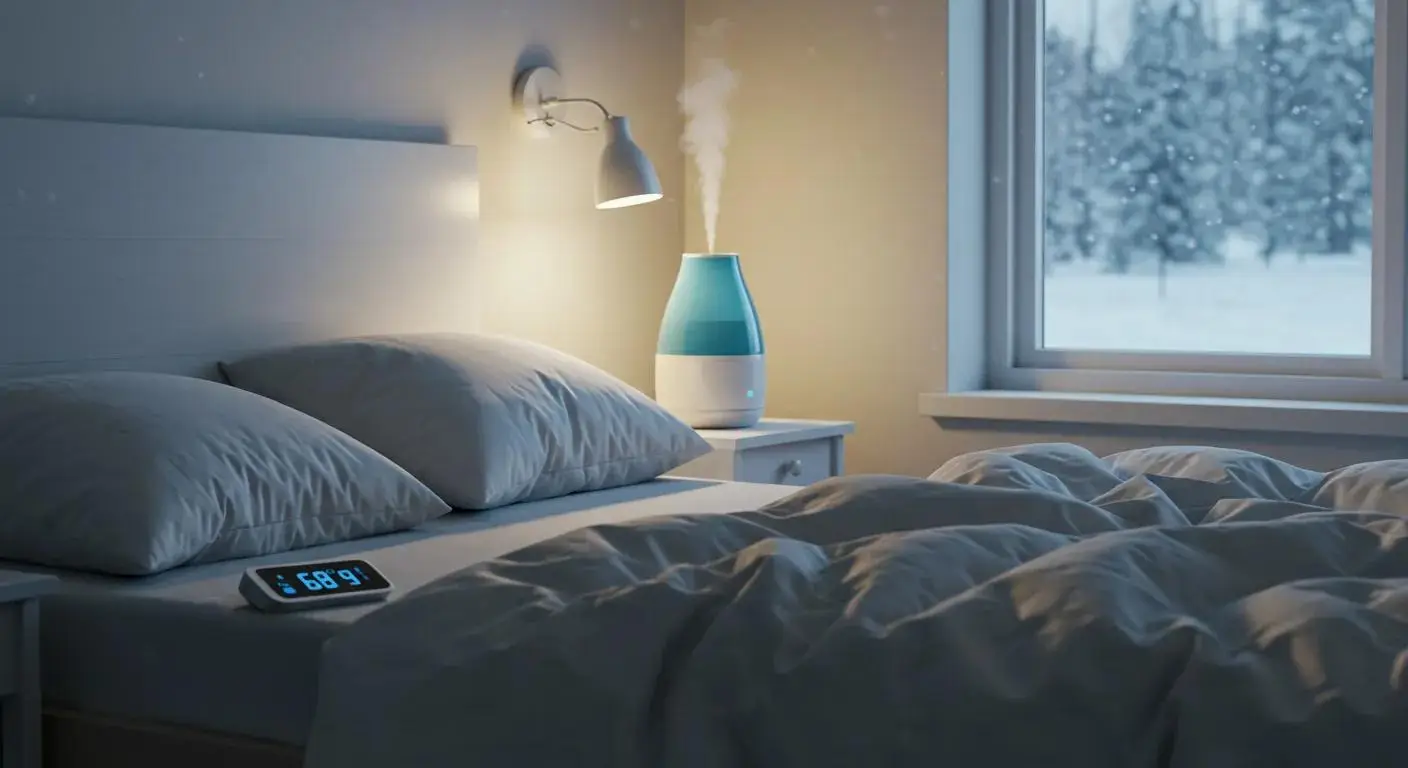
Creating a winter-ready bedroom involves numeric targets for temperature and humidity, thoughtful material selection for sheets and blankets, and a light-exposure routine that supports circadian timing. The bedroom environment should encourage core temperature decline at bedtime while preventing overnight chill or overly dry air that irritates mucous membranes. Implementing adjustable humidification, breathable insulating bedding, and consistent lighting practices helps maintain sleep continuity and next-day alertness. The following subsections provide specific numeric ranges, material comparisons, and routine steps to optimize your winter sleep environment.
The best bedroom temperature for winter sleep typically falls between 60–68°F, which supports the body’s natural core cooling without causing cold stress, and humidity near 40–55% prevents dry air while reducing respiratory irritation. Maintaining relative humidity near fifty percent helps skin and airway comfort, and a small humidifier can correct overly dry indoor air caused by winter heating systems. If rooms feel colder or warmer than the target range, localized solutions—extra layers, a programmable thermostat, or zoned heating—can preserve sleep without overheating. These environmental targets set the stage for choosing bedding materials that balance warmth and breathability.
Bedding materials differ in warmth, breathability, and moisture-wicking ability; flannel sheets and wool blankets provide effective insulation while allowing moisture to escape, down alternatives offer high warmth-to-weight ratios, and layered textiles let you fine-tune heat retention. A layered approach—base breathable sheet, insulating mid-layer like wool or down, and a lightweight top layer—gives flexibility to remove or add covering as core temperature changes during sleep. Choose natural fibers or performance blends that wick humidity away from skin to avoid trapped moisture that causes cold or sweat. These material choices naturally connect to mattress characteristics, since core mattress layers also influence warmth and surface temperature.
Consistent daytime light exposure and evening dimming help anchor circadian rhythm and melatonin timing, while calming pre-sleep routines reduce arousal and facilitate the core temperature drop needed for sleep onset. Sample practices include a 30–60 minute morning bright-light walk and an evening 30-minute wind-down with reduced screen use, dimmed lighting, and a short relaxation sequence such as deep breathing or a warm bath. Evening routines should lower environmental stimulation and progressively dim lights to cue melatonin without abrupt shifts. These behavioral routines work hand-in-hand with mattress and bedding choices to maximize restorative sleep through colder months.
Mattress material and construction determine heat retention, breathability, and support—key attributes for staying warm without overheating during winter nights. Memory foam tends to retain heat due to low thermal conductivity and dense comfort layers, latex is more naturally breathable and resilient, and hybrid designs combine foam comfort with innerspring airflow for balanced insulation. Choosing a mattress that matches your sleep temperature preference, combined with breathable protectors and sheets, creates a winter sleep system that supports spinal alignment and warmth. Below is a concise comparison table to help Effingham and Mattoon shoppers weigh warmth, breathability, and support across common mattress types.
Different materials trade off insulation and airflow in predictable ways.
| Mattress Type | Warmth Retention | Breathability | Support |
|---|---|---|---|
| Memory foam mattress for cold sleepers | High — holds more surface heat; cozy feel | Low to Medium — can trap heat unless gel-infused | High contouring support for pressure relief |
| Latex mattress winter comfort | Medium — naturally insulating with quicker dissipation | High — open-cell/latex structure promotes airflow | High resilience and zoned support for alignment |
| Hybrid mattress insulation features | Medium — coil core increases airflow, foam layers add warmth | Medium to High — coils improve ventilation | Strong support from coil + comfort layering for spinal alignment |
Memory foam retains warmth because its dense polymers slow heat transfer, producing a close, enveloping feel that many cold sleepers appreciate, though that same density can lead to overheating for others. Latex retains moderate warmth but dissipates heat faster due to natural resilience and cell structure that encourages airflow, making it a strong option for those who want warmth without night sweats. Hybrids use an innerspring or pocketed coil core to boost ventilation while foam comfort layers provide insulating warmth; hybrids often hit the middle ground for temperature balance. Layering a breathable mattress protector and using natural-fiber sheets helps modulate surface temperature further, which is why the next section discusses how support affects alignment during extended winter rest.
Proper mattress support maintains neutral spinal alignment as time in bed increases during colder months, preventing stiffness and pain that can arise from prolonged pressure in poor sleeping posture. Support refers to how a mattress preserves spinal curves across body types, while firmness is about surface feel—side sleepers often need slightly softer comfort layers for shoulder/hip relief, back sleepers benefit from medium-firm support to keep lumbar alignment. In winter, when people spend longer continuous periods in bed, selecting a mattress with adequate support and zoned layers reduces morning discomfort and preserves joint mobility. Testing mattress support in person or via personalized guidance helps ensure the right match for your sleep position and seasonal needs.
Local recommendations should focus on material and support characteristics rather than specific promotions, advising residents to prioritize memory foam if they prefer a warmer surface, latex for breathability, or hybrid for balanced insulation and airflow. Trying mattresses in-store under winter-like bedding conditions helps you feel how materials interact with insulating layers. Midwest Mattress Company’s Effingham and Mattoon teams offer in-person consultations to match material choice, firmness, and accessory combinations to individual body type and cold-sleep preferences, helping families select solutions that work in local climate. Personalized fitting naturally leads into accessory options—adjustable bases and protectors—that enhance winter sleep comfort.
Adjustable bases and mattress protectors serve distinct but complementary roles: bases improve positioning and circulation for comfort, while protectors add hygiene and can slightly modify surface insulation. Together they form a winter sleep toolkit that enhances comfort, supports health conditions like reflux or circulation issues, and prolongs mattress performance. Choosing the right protector material and base features tailors the bed to seasonal needs without replacing the mattress. The table and list below compare accessory benefits and help you decide which combinations suit your winter routine.
Accessories vary in function and winter-specific benefits.
| Accessory | Primary Benefit | Practical Use Case |
|---|---|---|
| Adjustable base | Elevation for circulation and reading comfort | Raise head to reduce overnight congestion or acid reflux in cold months |
| Thermal mattress protector | Adds slight insulating layer + moisture barrier | Use under sheets to trap warmth without trapping sweat if breathable |
| Breathable protector | Hygiene with airflow preservation | Ideal when paired with memory foam to prevent overheating while protecting warranty |
Adjustable bases change the bed angle to improve circulation, reduce pressure points, and help relieve symptoms like nighttime congestion or mild reflux that can worsen in winter, which makes them useful for comfort and health during longer sleep periods. Elevating the upper body slightly can reduce postnasal drip and ease breathing in cold-dry air, while leg elevation promotes venous return after sedentary daytime routines common in colder months. Compatibility is generally high with foam and hybrid mattresses, but confirming mattress flexibility and weight limits ensures reliable operation. Understanding these use-cases helps you pair a base with mattress type for optimal winter comfort and transitions naturally to protector selection.
Mattress protectors form a barrier against moisture, allergens, and spills while also contributing a thin insulating layer that can increase perceived warmth without heavy bedding; material choice controls breathability and thermal effect. Waterproof protectors add hygiene but can trap heat unless they use breathable membranes; thermal or fleece-backed protectors add warmth but should balance moisture wicking to prevent sweat accumulation. Regular cleaning and selecting a protector rated for breathability preserves mattress performance and prevents winter humidity-related issues like mold in poorly ventilated spaces. These protector strategies flow directly into mattress care practices you should adopt during winter months.
Winter mattress care focuses on inspection, rotation, humidity control, and protective layering to preserve support and comfort through seasonal stressors. Regularly checking for sagging or soft spots, using a breathable mattress protector, and rotating per manufacturer guidance extend lifespan and maintain spinal support when people spend more time in bed. Manage indoor humidity with a humidifier or dehumidifier as needed, and ensure bed bases provide firm structural support to prevent premature wear. The practical checklist below outlines seasonal actions and ends with how to access local in-store inspections.
Practical steps help you maintain comfort and avoid surprises during colder months.
A seasonal mattress checklist begins with inspection for sagging or seam wear, followed by rotation or flipping if your model allows, and consistent use of a breathable protector to guard against moisture and staining. Keep the bed platform or foundation solid and free of excess flex; inadequate support increases localized wear and can deepen impressions during long winter use. Address room humidity with a humidifier to near 50% if heating dries the air, and launder removable covers per label instructions to remove body oils and dust mites. These tasks reduce deterioration and segue into local resources where you can get hands-on guidance.
For residents of Effingham and Mattoon seeking in-person fitting or mattress inspections, Midwest Mattress Company offers local expertise to evaluate mattress condition, recommend material and accessory combinations for winter, and provide personalized guidance on support and fit. Their teams can demonstrate how different mattress constructions feel with seasonal bedding and advise on protector and base pairings that preserve comfort and health. Scheduling an in-store consultation helps you test alignment, temperature response, and accessory compatibility under conditions similar to your home setup. Local support makes it easier to implement the care checklist above and ensures solutions that match community climate.
Behavioral changes complement environmental and product strategies: gradually shift sleep timing, increase daytime activity and light exposure, and adopt a consistent pre-sleep routine to counter the circadian and temperature effects of fall and winter. These adjustments reduce the common problems of earlier sleepiness, fragmented nights, and morning grogginess that come with seasonal change. Below are clear scheduling and ritual recommendations that fit local daily life and daylight patterns. Following those behaviors supports the mattress and bedroom adjustments described earlier.
Shift your schedule gradually by moving bedtime and wake time 15–30 minutes earlier or later over 1–2 weeks to adapt to daylight savings or seasonal drift, keeping morning light exposure consistent to anchor circadian timing. Use alarms that prompt morning light activities and maintain steady mealtimes and exercise to reinforce the new schedule. Small iterative changes reduce sleep debt and make the transition more sustainable than abrupt shifts. These timing practices pair with pre-sleep rituals to improve sleep onset and continuity.
A 30-minute pre-sleep ritual—dim lights, light stretching, warm shower or bath, and brief relaxation breathing—encourage core cooling and reduces arousal before bed, making sleep onset smoother even as nights lengthen. Avoid heavy meals and stimulants within three hours of bedtime and limit stimulating screen time in the final hour to allow melatonin to rise naturally. Layering warm, breathable bedding after the ritual prevents uncomfortable temperature swings during initial sleep cycles. Combining ritual, routine, and correct bedding maximizes the restorative quality of winter sleep.
This FAQ-style section gives concise, actionable answers to the most common winter sleep concerns, addressing environment, mattress choices, and adaptation strategies that families encounter during seasonal shifts. Each answer provides direct guidance you can implement tonight, with pointers toward in-person assessment if problems persist. The compact Q&A below is optimized for quick reference and practical application.
Preparing your sleep environment starts with setting the bedroom to 60–68°F and 40–55% humidity, choosing layered bedding that combines breathable base sheets and insulating mid-layers, and maintaining consistent morning light exposure to stabilize circadian rhythm. Use a breathable mattress protector and check mattress support to prevent sagging under longer nightly use, and add a humidifier if heating dries the air. Establish a calming pre-sleep routine of 30 minutes to dim lights and reduce stimulation, which helps synchronize melatonin release. These environment and routine steps create a reliable foundation for better winter sleep.
Memory foam provides the warmest, hug-like surface and suits people who feel cold at night, while latex offers breathability with moderate warmth for those who want airflow, and hybrids balance insulation and ventilation through a coil core plus foam layers. For warm-but-not-overheating sleep, select materials with breathable covers, gel or open-cell foams, or hybrid constructions that promote airflow; pair with natural-fiber sheets to manage moisture. Try mattresses with seasonal bedding in-store to assess real-world thermal behavior. This comparative approach leads to targeted accessory choices like breathable protectors and adjustable bases.
Winter changes sleep via circadian shifts, increased melatonin at night, and altered thermoregulation; adapt by increasing morning light exposure, keeping bedroom temperature and humidity in recommended ranges, and using layered, breathable bedding paired with mattress and accessory choices that match your heat preference. Implement gradual schedule adjustments for daylight savings and adopt a calming pre-sleep ritual to improve sleep onset and continuity. If persistent sleep disruption continues despite these measures, consider an in-person mattress evaluation to ensure support and materials are suited to your seasonal needs.