
Hot nights and muggy bedrooms disrupt sleep by interfering with the body’s core temperature drop and skin heat loss mechanisms, producing more awakenings and shallower restorative sleep. This article explains the physiology behind thermal sleep disruption, how relative humidity compounds the problem, and which mattress and bedding choices can reduce nocturnal overheating. You will learn ideal bedroom setpoints, the mechanisms behind cooling mattress technologies such as gel, phase-change materials (PCM), open-cell foams and coils, and practical accessory and environment strategies for hot, humid climates. The goal is to provide science-backed explanations plus a buyer-focused pathway so you can match mattress features, bedding materials, and room controls to your symptoms — night sweats, dampness, or allergen sensitivity. Read on for targeted guidance on sleep-stage impacts, humidity thresholds, mattress feature tradeoffs, product discovery for cooling mattresses in 2025, and actionable tips for optimizing your bedroom climate.
Heat affects sleep quality by preventing the normal nocturnal decline in core body temperature needed to initiate and maintain deep and REM sleep; elevated ambient temperatures impede heat dissipation and increase micro-arousals. Mechanistically, sleep onset relies on peripheral vasodilation and evaporative cooling; when ambient temperature exceeds skin temperature or limits evaporation, the brain detects thermal stress and fragments sleep. The specific benefit of understanding this physiology is that targeted interventions (mattress design, bedding, and room climate control) can restore the thermal gradient that promotes slow-wave and REM sleep. Understanding these mechanisms sets the stage for mattress- and environment-level fixes that follow.
Core body temperature normally drops by roughly 0.5–1.0°C during the early night as part of circadian timing, and peripheral vasodilation and sweating help shift heat to the skin for dissipation. This thermoregulatory cascade signals the brain to enter consolidated sleep, and disruption to any component — for example reduced evaporative cooling — delays sleep onset and increases wakefulness. Practical takeaways include ensuring the bedroom allows convective and evaporative heat loss (fans, breathable bedding) and minimizing insulating layers that trap heat against the skin. Restoring that nocturnal temperature decline improves sleep initiation and supports deeper slow-wave cycles.
Deep sleep (slow-wave) and REM sleep differ in thermoregulatory control: slow-wave sleep tolerates some thermal variance but is vulnerable to fragmentation, while REM depresses thermoregulatory responses and is highly sensitive to ambient heat. Elevated temperatures increase awakenings and shorten the duration of both slow-wave and REM stages, which undermines memory consolidation and daytime cognitive function. Research and field observations link hot nights to reduced slow-wave percentage and REM continuity, producing non-restorative sleep even when total time in bed is unchanged. Recognizing stage-specific vulnerability helps prioritize cooling strategies that preserve both pressure-relief and thermal conductivity.
Night sweats arise when sweat production aims to increase evaporative cooling, but in high-humidity or poorly ventilated environments evaporation is inefficient, causing persistent skin wetness and micro-arousals. Additionally, insulating bedding or slow-draining mattress materials hold moisture and heat at the skin interface, promoting autonomic arousal and sleep fragmentation. Practical adjustments include selecting moisture-wicking covers, using breathable mattress constructions, and increasing convective airflow at night to restore effective evaporative cooling. Controlling both the mattress surface and room ventilation reduces the frequency of temperature-related awakenings.
Relative humidity (RH) modifies how effectively sweat evaporates and how comfortable the skin senses temperature; at higher RH the body’s key cooling mechanism becomes less effective, amplifying heat stress. Humidity also affects indoor air quality by encouraging mold and dust-mite growth when sustained above certain thresholds, which in turn creates allergen-driven sleep disruption. The value of measuring and managing RH is that it directly affects perceived temperature and health risks; using a hygrometer and targeted devices (dehumidifiers, controlled ventilation) provides a measurable pathway to improved sleep. These environmental controls work best in tandem with mattress and bedding choices that promote moisture management.
Ideal indoor humidity for comfort and reduced allergen growth typically falls in the broadly recommended band around 30–50% RH, with some guidance extending acceptable ranges to 40–60% depending on climate and occupant sensitivity. This range balances efficient evaporative cooling for skin comfort while limiting conditions that favor mold and dust-mite proliferation. Measuring RH with an inexpensive hygrometer gives an objective baseline; if readings are consistently above recommended bands, a dehumidifier or increased ventilation is usually warranted. Maintaining RH in the ideal range supports both thermal comfort and long-term bedroom health.
High humidity reduces the vapor pressure gradient that drives sweat evaporation, so sweat accumulates on the skin instead of evaporating and cooling the body, which feels hotter and induces more wakefulness. The combined effect of high temperature plus high RH is multiplicative: perceived heat rises sharply and sleep fragmentation increases. Immediate fixes include boosting airflow with fans, running dehumidifiers, and switching to moisture-wicking sleep layers to re-enable evaporative heat loss. These measures reduce perceived temperature and lower the frequency of thermal arousals.
Sustained RH above roughly 50% creates favorable conditions for mold growth and dust-mite populations, both of which release particles that provoke allergic rhinitis and asthma symptoms, fragmenting sleep and reducing sleep quality. The health consequence is more nighttime coughing, nasal congestion, and micro-awakenings, especially for sensitive individuals. Mitigation combines humidity control, frequent laundering of bedding, and allergen-barrier mattress protectors to reduce exposure. Addressing mold and dust-mite risks restores uninterrupted sleep and reduces respiratory-driven daytime impairment.
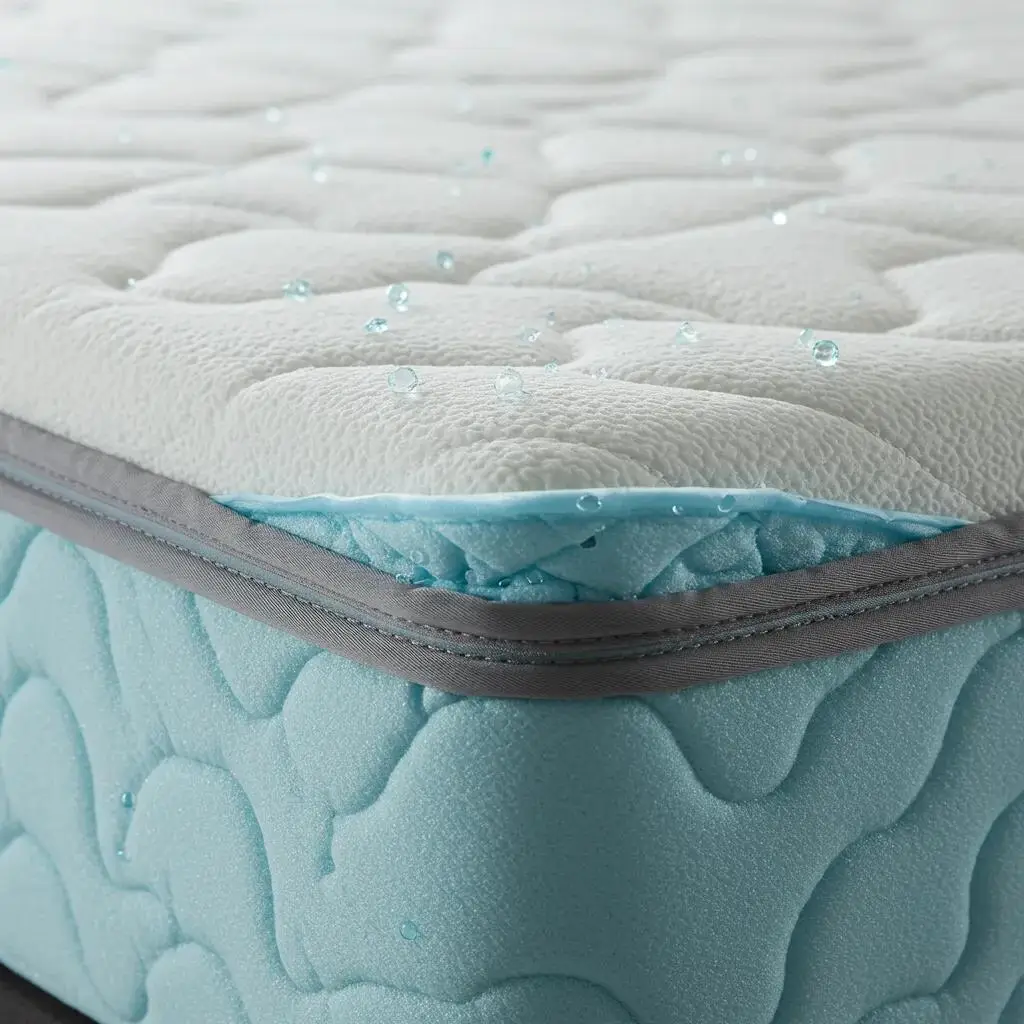
Cooling mattress features work through three principal mechanisms: increased conductive heat transfer away from the body, latent heat absorption (phase-change materials), and enhanced convective airflow through open structures or coils. Effective designs combine surface-level breathability (knitted covers, moisture-wicking fabrics) with internal structures that allow air movement and limit heat accumulation. The benefit is that an engineered mattress can restore the skin-to-air temperature gradient and reduce night sweats without sacrificing support or pressure relief. Below is an evidence-oriented comparison of key cooling technologies and how they function in practice.
Cooling technologies differ by mechanism: gel additives increase conductive heat transfer, PCMs absorb or release latent heat at targeted temperatures, open-cell foams reduce insulating closed cells, and coil/air channels promote convective cooling. Each mechanism has tradeoffs — PCMs actively buffer temperature peaks but add complexity and cost; coils maximize airflow but require good perimeter design to avoid pressure hotspots. Understanding these mechanisms helps match product selection to symptoms (e.g., night sweats vs trapped moisture) and sleeper type (weight, position).
Different cooling technologies deliver distinct benefits and limitations for hot sleepers.
| Technology | Mechanism | Typical Benefit |
|---|---|---|
| Gel-infused foam | Conductive heat dispersion via gel beads | Lowers surface warmth; improves initial cool-to-touch feel |
| Phase-change material (PCM) | Latent heat absorption at set temperatures | Buffers temperature spikes; stabilizes surface temp |
| Coil / hybrid systems | Convective airflow through channels | Improves long-term breathability and moisture transport |
This comparison clarifies how combining mechanisms—surface wicking plus internal airflow—often yields the most consistent cooling effect.
Material choice changes thermal conductivity and airflow: natural latex typically breathes better than dense memory foam and resists heat retention; hybrid designs pair foam comfort layers with coil cores to increase airflow; memory foam varies widely — dense closed-cell foams trap heat while open-cell and gel-infused variants dissipate it. Practical examples: latex appeals to sleepers who prioritize natural breathability, hybrids suit those needing both pressure relief and convective cooling, and advanced memory foams can perform well when specifically engineered for airflow. Selecting the right material depends on your sleep position, weight-related sinkage, and sensitivity to surface warmth.
Firmness influences contact area and sinkage: firmer surfaces reduce deep sinkage and can improve convective airflow around the sleeper, while softer surfaces increase contact and can trap heat in zones. Coil systems and internal channels enhance convective heat removal especially when combined with breathable covers, and spacing of coils or channels affects how quickly heat moves away from the body. For practical buyers, side sleepers requiring pressure relief should seek cooling materials that still provide contouring, while back and stomach sleepers may benefit from slightly firmer, more breathable constructions. Balancing pressure relief and airflow is central to selecting a cooling mattress.
This section gives objective, technology-focused summaries of top cooling mattress options for hot sleepers in 2025 and what they offer in terms of cooling mechanisms and sleeper suitability. The goal is to present neutral evaluations so readers can match features to their needs: surface cool-to-touch benefits, internal airflow, PCM buffering, or coil-driven convection. Product discovery is a natural next step after assessing which mechanisms matter most for your symptoms and budget.
The Helix Midnight Luxe is characterized by targeted cooling layers typically paired with zoned support and an innerspring core that enhances airflow through coil channels. Cooling features often include gel-infused comfort layers and breathable covers designed to reduce surface heat, making the model suitable for hot sleepers who also need pressure relief for side sleeping. Pros include strong airflow and zonal support; potential tradeoffs are that some foam layers still retain residual heat for heavier sleepers. For shoppers, this mattress fits those prioritizing mixed comfort and convective cooling in a hybrid format.
The Saatva Classic relies on an innerspring architecture with a breathable cover and spacious coil core that promotes convective heat transfer away from the sleeper. Its construction favors sleepers seeking traditional coil airflow, and the layered pillow-top designs are often paired with cooling-fabric covers to reduce surface warmth. Pros include strong long-term breathability and reduced heat trapping compared with dense all-foam options; tradeoffs can include a firmer feel that may not suit all side sleepers. This mattress suits buyers who prioritize airflow and traditional coil support.
The Leesa Sapira Chill Hybrid blends cooling foams, targeted support, and an innerspring core to balance pressure relief with convective airflow, and it often incorporates specialized cooling layers to reduce heat buildup. Its hybrid design is aimed at sleepers who want both contouring comfort and the breathability benefits of coils, making it a good option for moderate-to-heavy sleepers who overheat on dense memory foam. Pros are paired pressure relief and cooling tech; tradeoffs include higher price points for advanced layered constructions. This mattress is ideal for those wanting hybrid cooling without sacrificing contouring support.
A compact comparison helps highlight differences across models in cooling emphasis, support feel, and target sleepers.
| Mattress (Example) | Cooling Feature | Best For |
|---|---|---|
| Hybrid with PCM | PCM + coils | Night-sweaters needing temp buffering |
| Coil-focused innerspring | Wide coil channels | Those prioritizing airflow |
| Gel/open-cell foam hybrid | Gel + open-cell foam | Side sleepers wanting contour + cooling |
This comparison reveals that no single mattress suits everyone; matching mechanism to symptoms delivers the best results.
Bedding and accessories extend mattress performance by managing surface temperature, moisture transport, and allergen barriers; choosing the right fabrics and protectors reduces skin-cling, promotes evaporation, and limits mold exposure. Moisture-wicking sheets, breathable protectors, cooling pillows, and dehumidifiers operate at different points in the sleep microclimate, from immediate skin contact to room-level humidity control. Combining bedding that moves moisture away from the skin with a mattress that breathes provides compounded benefits for night-sweaters and humid-region sleepers. The table below helps match specific bedding/accessory types to their functional benefits.
Common cooling fabrics include linen, cotton percale, Tencel (lyocell), and advanced performance blends; linen and percale are prized for breathability, Tencel and performance fibers for moisture wicking. Each fabric balances feel and function: linen is highly breathable and dries quickly, percale offers crisp airflow, and Tencel wicks and feels cool to the touch. Choose fabrics based on whether your primary issue is heat at the skin (choose wicking + breathable) or dampness from humidity (choose highly absorbent or fast-drying weaves). Layering strategies can combine a wicking sheet with a breathable top layer for optimal comfort.
| Item | Material / Function | Benefit for Hot/Humid Sleepers |
|---|---|---|
| Sheets | Linen / Percale / Tencel | Breathability and moisture management |
| Mattress protector | Breathable, waterproof membranes | Allergen barrier + moisture transport |
| Cooling pillow | Gel or PCM-infused covers | Surface temperature reduction |
Selecting combinations—wicking sheets plus a breathable protector—optimizes both comfort and mattress longevity.
Moisture-wicking fabrics move sweat away from the skin to outer fabric layers where it can evaporate more readily, preserving a drier microclimate at the skin interface and reducing thermal discomfort. The material science relies on capillary action and hydrophilic/hydrophobic fiber blends to accelerate moisture transport. Practical use tips include rotating and laundering wicking sheets regularly to maintain performance and pairing them with a breathable mattress surface to avoid trapping evaporated moisture. When combined with room-level dehumidification, wicking fabrics meaningfully reduce perceived humidity and night sweats.
Cooling pillows and protectors provide targeted surface benefits—pillows lower localized head/neck temperature while protectors block allergens and transport moisture away from the mattress core. Effectiveness varies by technology: gel and PCM layers change surface feel, while breathable perforated protectors aid long-term moisture movement. For allergy-prone sleepers, protectors add a health-focused benefit by preventing dust-mite and mold intrusion, especially in humid climates. Pairing these accessories with an appropriate mattress and room humidity control creates a holistic solution for hot, humid sleepers.
Prioritize interventions in this order: optimize room temperature and humidity, select bedding that manages moisture, and choose mattresses that balance airflow and pressure relief. Small changes—fan placement, thermoregulator setpoints, and a dehumidifier schedule—often yield outsized sleep improvements when aligned with mattress and bedding choices. The following lists summarize prioritized, actionable steps and device suggestions to implement a practical cooling strategy for nighttime comfort.
These prioritized steps create a baseline; next consider mattress and bedding upgrades to sustain improvements.
Start by measuring current conditions with a thermometer and hygrometer to set objective targets; then sequence interventions—ventilation, fans, air conditioning, and dehumidification—based on readings and noise tolerance. For humid climates, dehumidifiers often provide the biggest perceived-cooling benefit because they restore evaporative function even without large temperature drops. If cooling devices are limited, prioritize cross-ventilation and a sleep fan directed at the torso to enhance convective heat loss. Small behavioral changes like opening windows early morning and blocking daytime heat also reduce overnight thermal load.
Choose dehumidifiers when RH consistently exceeds the ideal band (above ~50%); choose humidifiers when RH falls below ~30–40% and you experience nasal dryness. Dehumidifiers reduce perceived heat by restoring evaporative cooling, and they also curb mold and dust-mite growth in humid regions. Maintain devices properly—clean filters and monitor noise—to preserve air quality and comfort. Following a simple decision framework based on measured RH helps avoid counterproductive interventions.
Adopt pre-sleep cooling routines (cool shower, light carbs, reduced alcohol), wear breathable sleepwear, and time exercise earlier in the day to minimize evening metabolic heat. Hydrate appropriately but avoid large liquid intakes right before bed to reduce nocturnal awakenings, and minimize electronics that emit heat in the bedroom. These lifestyle changes complement mattress and bedding choices by lowering baseline body heat and improving the efficiency of environmental cooling. Consistent routines that reduce nocturnal heat production enhance the benefits of material and device-based strategies.
Chronic sleep fragmentation from thermal stress increases cardiovascular strain, impairs glucose metabolism, and reduces cognitive performance over time, linking persistent hot-night sleep loss to negative long-term outcomes. Repeated reductions in slow-wave and REM sleep impair memory consolidation, daytime alertness, and immune function, and can exacerbate cardiometabolic risk factors. Recognizing environmental drivers as modifiable contributors to these risks highlights the importance of mattress, bedding, and humidity strategies described earlier. Addressing night-time thermal stress is therefore both symptomatic relief and a preventive health intervention.
Poor thermoregulation can worsen sleep fragmentation and daytime sleepiness in people with breathing-related sleep disorders by increasing arousals and reducing the stabilizing restorative sleep that mitigates apnea impacts. Heat-related dehydration or nasal congestion in humid environments may also amplify snoring and upper-airway resistance for susceptible individuals. Anyone with persistent breathing disturbances should pursue clinical evaluation, while environmental fixes serve as supportive measures to reduce symptom burden. Environmental optimization complements medical interventions and can improve symptomatic outcomes.
High humidity fosters mold and dust-mite growth, both of which increase allergen load and provoke nocturnal symptoms like coughing and nasal congestion that fragment sleep. Chronic exposure correlates with worsened asthma control and greater night-time awakenings for sensitized individuals. Mitigation through humidity control, mattress protectors, and diligent cleaning reduces exposure and improves sleep continuity for at-risk sleepers. Combined environmental and mattress-level strategies are particularly effective in humid climates.
Restorative slow-wave and REM sleep support cognitive function, metabolic regulation, and immune resilience; chronic reductions due to heat and humidity compromise these systems and elevate long-term health risk. Environmental interventions—temperature and humidity control, appropriate mattresses and bedding, and lifestyle adjustments—represent actionable levers to restore restorative sleep in hot environments. Taking a multi-pronged approach that combines room climate management with mattress and accessory choices offers the most reliable pathway back to consistent, health-supporting sleep.
Common signs that heat and humidity are disrupting your sleep include frequent awakenings during the night, difficulty falling asleep, and waking up feeling hot or sweaty. You may also experience increased restlessness or shallow sleep, which can lead to daytime fatigue and reduced cognitive function. If you notice that your sleep quality declines during warmer months or in humid environments, it may be time to assess your bedroom conditions and bedding choices to improve your comfort and overall sleep quality.
To measure humidity levels in your bedroom, you can use a hygrometer, a simple device that provides accurate readings of relative humidity (RH). These devices are widely available and can be digital or analog. Ideally, you want to maintain humidity levels between 30% and 50% for optimal sleep comfort. Regularly checking the humidity can help you determine if you need to use a dehumidifier or improve ventilation to create a more conducive sleeping environment.
Bedding plays a crucial role in managing heat and humidity by influencing how moisture is absorbed and how air circulates around your body. Choosing breathable, moisture-wicking fabrics like cotton percale or Tencel can help keep you cool and dry. Additionally, using lightweight blankets and sheets can prevent heat retention. Proper bedding not only enhances comfort but also helps regulate your body temperature, reducing the likelihood of night sweats and improving overall sleep quality.
Yes, certain sleep positions can help with heat regulation. For instance, sleeping on your back allows for better airflow around your body, which can help dissipate heat more effectively. If you prefer side sleeping, consider using a cooling pillow to keep your head and neck cool. Additionally, avoiding heavy blankets and opting for lighter bedding can help maintain a comfortable temperature, regardless of your preferred sleep position.
To reduce allergens and improve sleep quality, it’s recommended to wash your bedding at least once a week. This includes sheets, pillowcases, and duvet covers. For mattress protectors and pillows, aim to clean them every 1-3 months, depending on usage and sensitivity to allergens. Regular cleaning helps eliminate dust mites, mold, and other allergens that can disrupt sleep, especially in humid environments where these issues are more prevalent.
To improve sleep in hot and humid conditions, consider adopting a few lifestyle changes. First, establish a consistent sleep schedule to regulate your body’s internal clock. Incorporate pre-sleep routines, such as taking a cool shower or practicing relaxation techniques. Additionally, stay hydrated throughout the day, but limit fluid intake close to bedtime to reduce nighttime awakenings. Lastly, avoid heavy meals and alcohol before bed, as they can increase body temperature and disrupt sleep.
Yes, using a fan or air conditioning can significantly improve sleep quality by enhancing airflow and reducing ambient temperature. Fans create a cooling breeze that helps evaporate sweat, while air conditioning lowers the overall room temperature, making it easier for your body to regulate its temperature during sleep. Both options can help create a more comfortable sleeping environment, especially in hot and humid conditions, leading to deeper and more restorative sleep.